
Part of The Pet Loss Support Series
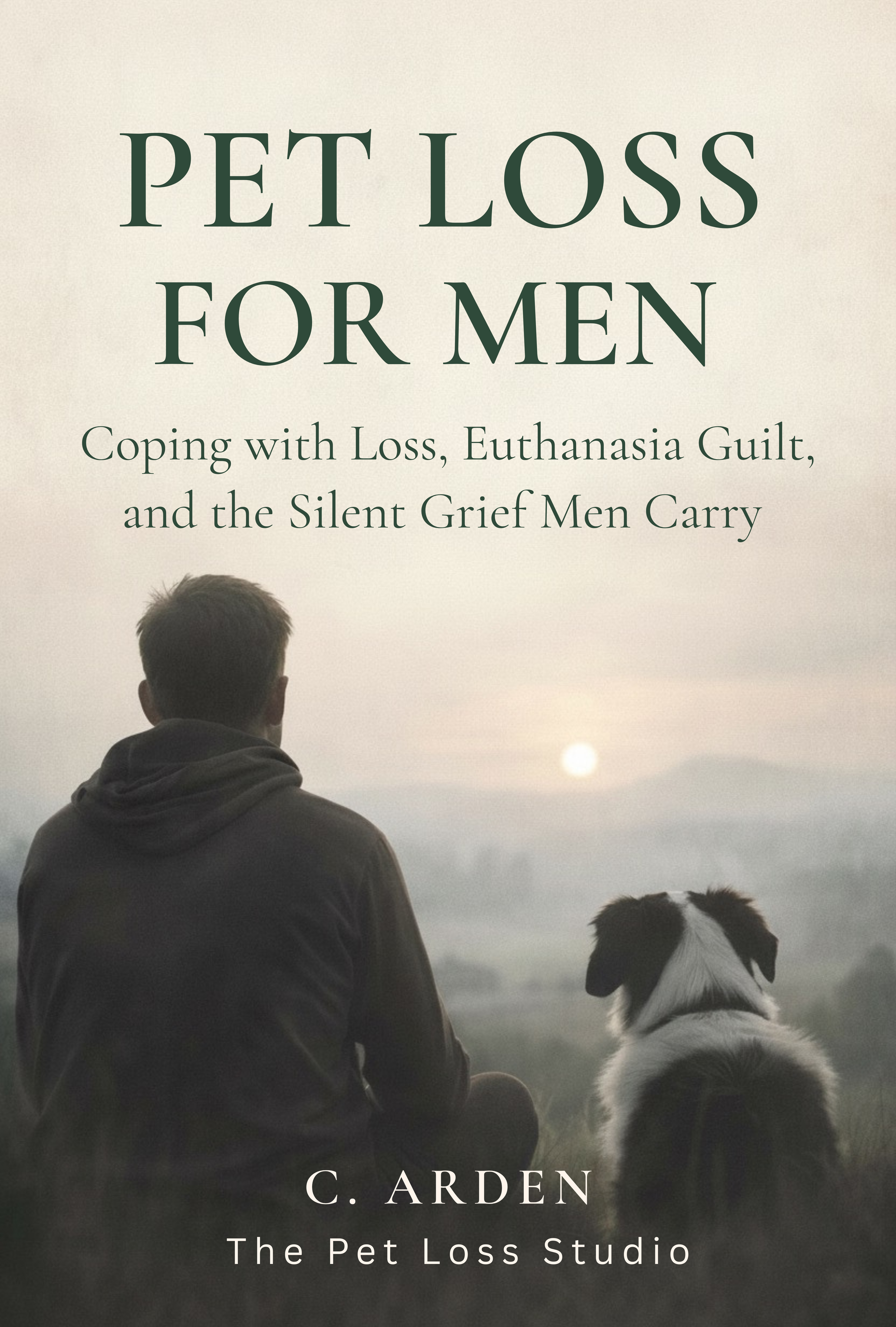
Pet Loss for Men
Coping with Loss, Euthanasia Guilt, and the Silent Grief Men Carry
A calm guide for men navigating grief after losing a beloved dog, cat, or companion animal.
A compassionate guide for men grieving the loss of a beloved dog, cat, or companion animal, written for men carrying that grief in silence.
Part of the Pet Loss Support Series helping grieving pet owners navigate loss with compassion and clarity.
Available in Paperback, Hardcover, and Kindle
There is nothing weak about a man crying over his dog
You are not too sensitive. You are not overreacting. You loved a dog or cat with your whole heart and now they are gone. The grief you feel is not weakness. It is the cost of loving well.
This book was written for men who are coping with pet loss in silence because the world told them they should not be hurting this much. You deserve better than that.
This book is for you if
You have lost a pet and the grief is bigger than anyone around you understands
You lost a dog or cat who was part of your daily routine for years
You are expected to be fine at work, at home, and everywhere else, but you are not fine
You are carrying guilt about the euthanasia decision and cannot stop replaying it
You are struggling with guilt after making the euthanasia decision
You process grief through action, solitude, or silence, not by talking about your feelings
This loss has cracked open older grief you thought you had put behind you
You love someone, whether a partner, a father, or a friend, who is grieving a pet and you want to understand
What's Inside
Ten chapters that meet you where you are
1
Permission to Grieve
Why your grief is legitimate, why it hits this hard, and why you do not need anyone's permission, but here it is anyway.
2
When Pet Loss Collides with Other Losses
Why this loss may have cracked open grief from a divorce, a parent's death, or a life change you thought you had already dealt with.
3
Navigating Workplace and Social Expectations
How to get through the workday. What to say when people ask. How to handle the colleague who says it was just a dog.
4
When Others Don't Understand Your Bond
Partners, family, friends. Why they sometimes get it wrong and how to protect yourself without shutting them out.
5
Processing Grief Without "Talking About Feelings"
For men who process through action, physical activity, solitude, or problem-solving. Grieving the loss of a pet does not have to look like therapy to be real.
6
Practical Coping Strategies for Men
Concrete tools for sudden waves of grief, the sleepless nights, and the days when you cannot concentrate on anything.
7
Dads, Sons, and Generations of Men
What you learned about grief from your father. What you are teaching the people watching you now. And how to break the cycles that no longer serve you.
8
Finding Support That Feels Right
Professional help, informal support, and everything in between. Finding what works for how you are actually wired.
9
Honoring Their Memory Your Way
Creating a memorial that feels authentic to you. Not what grief culture says you should do. What actually means something.
10
Thinking About Another Pet
Whether and when to open your heart again. No pressure. No timeline. Just honest exploration of a question only you can answer.
What many men quietly feel after losing a dog or companion animal:
"Your dog didn't care about your job title, your income, or your failures. He was just glad you were home."
From the book
Who this book helps most
Men grieving the loss of a dog or cat
Men struggling with euthanasia guilt
Men who feel pressure to hide their grief
Partners, family, and friends trying to support a grieving man
You do not have to carry this alone
This book will not ask you to become someone you are not. It will not push you to cry if you are not a crier. It simply asks you to be honest with yourself about what you are feeling.
Many readers begin this book simply looking for a way to understand what they are feeling and why it hurts this much.
Available in Paperback, Hardcover, and Kindle.
Common Questions
Things you might be wondering
Why do men grieve pets differently?
Men are often taught to suppress emotion, to be stoic, to move on quickly. This does not mean men feel less. It means they often process grief differently, through action, solitude, physical activity, or problem-solving rather than talking. This book respects those differences and offers strategies that fit how men are actually wired.
Is it normal to grieve a pet this much as a man?
Yes. Completely. Your pet was not just an animal. They were your first greeting, your silent companion, your stress relief, and often the most unconditional relationship in your life. The grief you feel matches the bond you had. There is nothing abnormal about it.
How long does pet grief last?
Pet grief does not follow a timetable. For some people the sharpest pain lasts weeks. For others it can last months or longer. The intensity changes over time, but the love for the animal remains. This book focuses on helping you carry that grief in a healthy way rather than forcing yourself to move on.
I do not want to talk about my feelings. Will this book still help?
This book was specifically written for men who do not process grief by talking. It offers strategies for processing through action, physical activity, solitude, and practical problem-solving. You will not be asked to sit in a circle and share your feelings.
Can I buy this for someone else who is grieving?
Yes. Many people buy this for a partner, father, brother, or friend who is struggling with pet loss but would never seek help themselves. The tone is direct and respectful. It does not talk down to the reader or assume they want traditional grief support.
Is this only for dog owners?
No. The book is for any man grieving any pet. Dogs, cats, horses, birds, or any animal companion. The bond is what matters, not the species.
What Readers Are Saying
Words from people who have been where you are
Also in The Pet Loss Support Series
The Guilt and Grief Workbook
If guilt around euthanasia or second guessing the decision is the heaviest part of your grief, this structured workbook offers guided exercises to help you untangle self-blame and find a path toward self-forgiveness.
Available in Print and Kindle.
Learn More