
Part of The Pet Loss Support Series
Pet Loss for Children
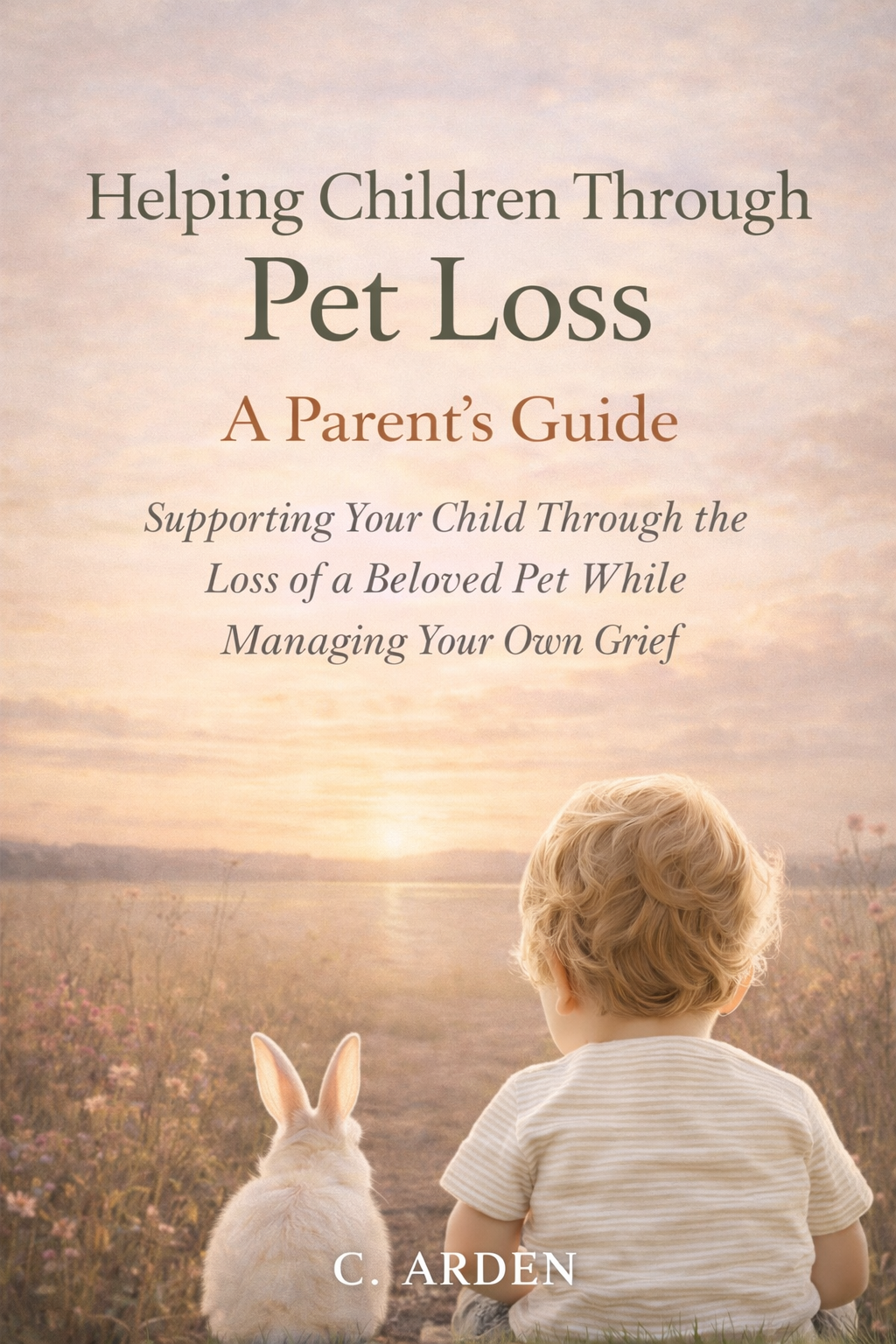
A Parent's Guide for Supporting Your Child through the Loss of a Beloved Pet
A gentle, practical guide for parents supporting a child through their first experience of death and grief.
Real conversation scripts, age-appropriate explanations, and honest guidance for one of parenting's most tender moments.
Part of the Pet Loss Support Series helping grieving pet owners navigate loss with compassion and clarity.
Available in Paperback, Hardcover, and Kindle
How you handle this moment will shape how your child understands love and loss for the rest of their life
For many children, losing a pet is their first real experience of death. The confusion on their face, the questions you do not know how to answer, the guilt they carry that you did not expect.
This book helps you find the right words when there are no right words. And it helps you manage your own grief at the same time.
This book is for you if
Your child's pet has died or is dying and you do not know what to say
Your child is asking questions about death that you are not sure how to answer
You are trying to support your child while managing your own grief at the same time
You want age-appropriate language for explaining pet death to a young child
Your child is showing signs of grief, guilt, or anxiety after losing a pet
You want to help your child build healthy emotional resilience through this experience
What's Inside
Eleven chapters of practical, gentle guidance
1
Preparing for the Conversation
How to prepare yourself emotionally before talking to your child. What to consider, what to plan, and how to create a safe space for the conversation.
2
Age-Appropriate Explanations
How children understand death at different ages and what language to use for toddlers, young children, and older children.
3
What to Say and What Never to Say
Real conversation scripts for the hardest questions. What helps, what accidentally hurts, and the phrases to avoid.
4
Managing Your Own Grief
Your child needs support, but you are grieving too. How to process your own loss while supporting your child through theirs.
5
Rituals, Memorials, and Saying Goodbye
Child-friendly ways to honour their pet's memory. Simple ceremonies, memory boxes, and goodbye rituals that help children process and heal.
6
Activities for Grieving Children
Guided activities, drawing prompts, and gentle exercises designed to give children a way to express what they cannot put into words.
7
Helping Children Carry Grief Over Time
Grief does not end after the first week. How to support your child through the months that follow, including anniversaries, holidays, and unexpected triggers.
8
Different Pets, Different Goodbyes
How to support children through the loss of different animals. Dogs, cats, fish, small mammals, birds, reptiles, horses, and even the unusual pets each carry different meanings for children.
9
When Professional Help Is Needed
How to recognise when your child's grief needs more support than you can provide, and how to find the right help.
10
Considering a New Pet
When your child asks for a new pet. How to navigate timing, readiness, and the difference between replacement and new love.
11
Long-Term Healing and Resilience
How this experience shapes your child's emotional resilience for life. The lessons grief teaches about love, courage, and the strength of families.
What parents often feel but rarely say out loud:
"I do not know how to explain death to my child when I can barely hold myself together."
Who this book is for
Parents explaining pet death to a child for the first time
Parents managing their own grief while supporting their child
Caregivers, grandparents, and teachers supporting a grieving child
Families preparing for a pet's end of life
You do not have to find the right words alone
This book gives you real conversation scripts, age-appropriate explanations, and gentle activities to help you support your child through grief, not push them past it.
Many parents begin this book simply looking for the words to start the conversation.
Available in Paperback, Hardcover, and Kindle.
Common Questions
Things you might be wondering
How do I explain pet death to a young child?
Use simple, honest language. Avoid phrases like "went to sleep" or "went away" which can create confusion and anxiety. This book provides age-specific scripts for children from toddlers through to older children, with exact words you can use and phrases to avoid.
Should I let my child see me cry?
Yes. When children see a parent grieve openly, they learn that sadness is a normal, healthy response to loss. It gives them permission to express their own feelings. What matters is that you also show them you can cope, that sadness does not mean falling apart forever.
My child thinks the pet's death is their fault. What do I do?
This is extremely common in children, especially between ages 4 and 7. Children often believe their thoughts or actions caused the death. Address it directly and gently. This book includes specific conversation scripts for exactly this situation.
How long does pet grief last in children?
Children grieve in waves, not stages. They may seem fine for days then suddenly become upset weeks later. This is normal. Grief can resurface around anniversaries, holidays, or life changes. This book covers how to support your child through the months that follow, not just the first days.
Should I get a new pet to help my child feel better?
Not immediately. A child needs time to grieve before they can form a new bond. Rushing to replace a pet can teach children that loss is something to be quickly fixed rather than felt. This book includes a full chapter on readiness, timing, and how to navigate the conversation when your child asks.
Is this book for the parent or for the child?
For the parent. This is a guide for adults supporting a child, not a book for children to read on their own. It gives you the understanding, language, and tools to talk with your child, recognise their grief, and support them through it. There is one short page written for the child at the back of the book, and a memory page you can fill in together, but the rest of the book is for you to read on your own.
What Readers Are Saying
Words from people who have been where you are
Continuing the Support
The Healing Letter
Some families want ongoing support after finishing the book. The Healing Letter is a gentle weekly email from The Pet Loss Studio for the quieter weeks of grief, when questions, memories, and difficult moments continue to surface over time.
Free. Written by C. Arden. You'll receive the first letter straight away.