
Pet loss grief
Will I Ever Recover From the Pain of Losing My Soul Pet?
Losing your soul pet can change every part of your life. Explore what research tells us about grief, what recovery might mean, and practical ways to live with their absence.
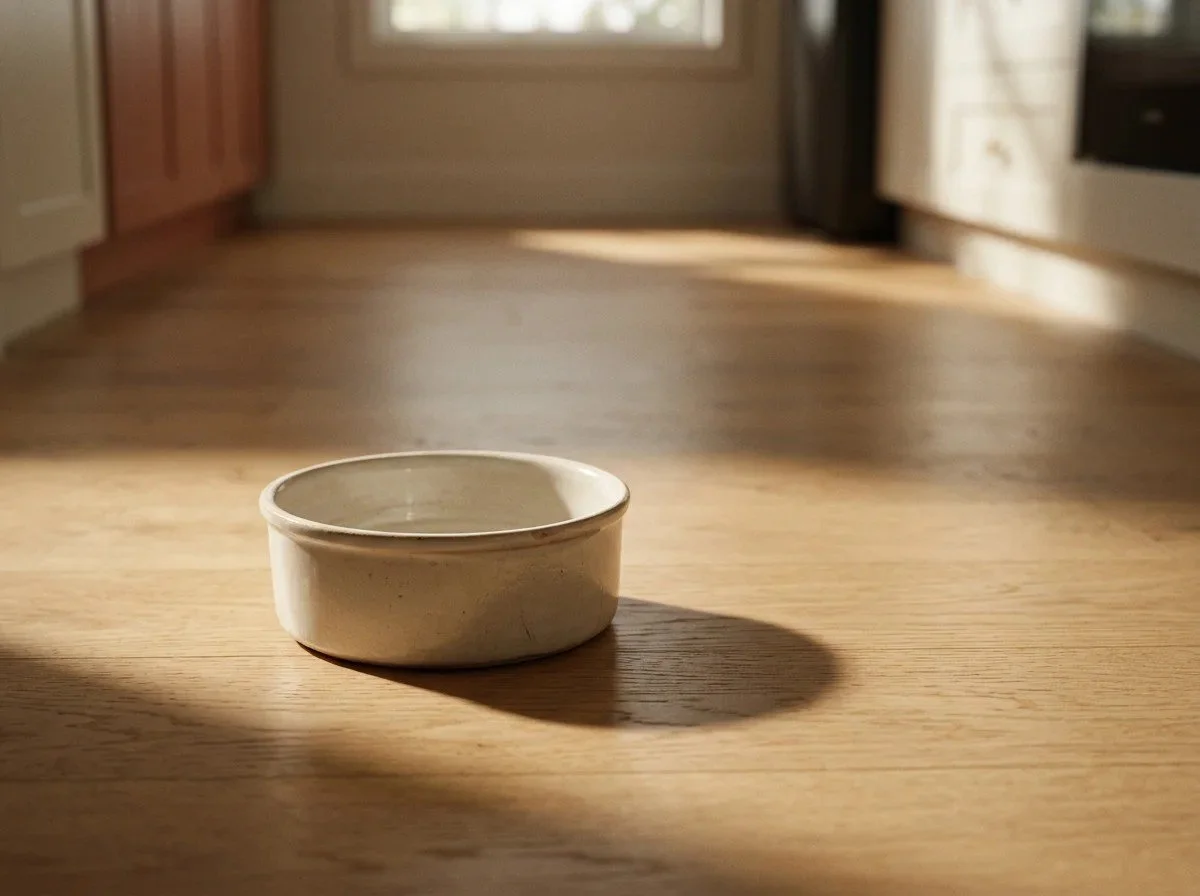
The water bowl is still on the kitchen floor. You have walked past it again and again today, and each time your eyes went to it before your mind caught up. You know it is empty. You have known for days. The knowing does not stop the looking.
There are other reflexes like it. Your hand drops to the side of the bed in the night and finds cold sheet where a warm back should be. You pause at the front door with the key in the lock, listening for the scramble of paws that always began before the key had finished turning. You say “we” to the cashier and correct it on the way to the car. You come home to a house that is exactly as you left it, and the stillness feels like a sound.
If you are reading this months or years later, you already know that grief for a soul pet does not keep to anyone’s schedule. The leash still hangs by the door, or you moved it to a drawer and cannot open the drawer. A particular stretch of sidewalk still belongs to the two of you.
If this dog or cat was your soul pet, the loss is not a sad event in your life. It is a change in the structure of your life. And the question that keeps you awake is not really about the pain. It is about what comes after it.
Can you learn to live with the loss of your soul pet without feeling that you are leaving them behind?
The direct answer
For many people, the most overwhelming periods of grief become less constant over time. They gradually find ways to sleep, manage everyday responsibilities and experience moments of pleasure again. But there is no reliable timetable for grieving a soul pet, and research specifically following pet owners through recovery remains limited.
What does not usually happen is forgetting. Grief for a soul pet rarely ends in indifference. The more common outcome is that the relationship continues in a different form, carried inside you rather than lived out in daily routines. You can miss them for the rest of your life and still live fully.
One more caution belongs with that answer. A minority of people stay in intense grief far longer than they expected; for them, more help is appropriate and available. Both truths are in this article.
Key takeaways
- A soul pet is often an attachment figure in the psychological sense, which is one reason the grief can be as severe as grief for a person.
- A 2026 UK study found that 7.5 percent of pet-bereaved participants met symptom criteria for probable prolonged grief disorder. Current diagnostic rules do not formally recognize pet death as a qualifying bereavement.
- Grief affects the body, sleep and concentration, and losing the daily care routines removes structure at exactly the moment you need it most.
- Adapting to the loss does not require ending the relationship. Continuing bonds, the ongoing inner connection to a pet who has died, are common and can be a source of comfort.
- If intense grief is still stopping you from functioning many months on, that is a reason to seek support, not a verdict on your character.
What people mean when they call a dog or cat their soul pet
“Soul pet” is not a clinical term. It is the phrase people reach for when “my dog” or “my cat” is not large enough for what they are describing.
Most people who use it have had other pets, and loved and grieved them too. The soul pet was different. For some, it was the pet who arrived at a turning point: a move, a divorce, a diagnosis, the first apartment lived in alone, the years after the children left. For others, it was the one who sat against their leg before they had admitted to themselves that they were struggling, or simply the one they spent the most hours with, until their presence became indistinguishable from the feeling of being at home.
What the phrase usually points to is mutuality. You were not only looking after them. They were, in their own way, looking after you. You knew the exact weight of their head on your foot. They knew the sound of your car from the end of the street.
Not every soul pet enters someone’s life during a difficult period. Sometimes the connection develops through years of ordinary companionship. Sometimes it is difficult to explain at all. The term describes the significance of the relationship to the person who experienced it, not a particular set of circumstances.
A soul pet is not a pet you loved more dramatically. It is one whose life was woven into yours so completely that their death pulls threads in every direction.
Why this one relationship became central to your life
Psychologists have a name for the kind of relationship many soul pets seem to occupy: an attachment bond. Attachment theory began with infants and parents, was later extended to adult relationships, and over the past two decades researchers have asked whether pets can fill the role for some owners.
Lawrence Kurdek’s 2009 study in the Journal of Family Psychology5 asked dog owners who they turned to in emotional distress. Many placed their dog above some of the humans in their lives, and this was more likely among owners heavily involved in the dog’s daily care. Kurdek concluded that some owners, not all, form attachment bonds with their dogs in the technical sense of the term. Whether that describes your relationship is something only you can judge.
Attachment theory predicts that the loss of an attachment figure is among the most painful losses a person can face. One study bears on this directly. In 2016, Lizabeth Eckerd and colleagues6 compared grief severity in two groups of college students, 211 who had lost a pet and 146 who had lost a person within the previous two years. The human-loss group scored somewhat higher on average, but the difference was small. In both groups, how close the participant had felt to the one who died was the strongest predictor of grief severity, and once closeness was in the model, most other factors stopped mattering.
This was one study, in one population, and it does not show that pet and human bereavement are the same experience. What it does suggest is that the closeness of the relationship was strongly associated with the severity of grief, whichever species was lost. If your soul pet was the one you came home to, confided in and reached for first, the intensity of what you feel is consistent with that finding. There is more in why losing a pet can hurt more than losing a person.
When the routines and the caring stop
A relationship with a soul pet is lived almost entirely through routine. Feeding at seven. The walk before work. The medication wrapped in cheese. The way you angled your body on the sofa to leave room. Over years, these small acts become the shape of your day.
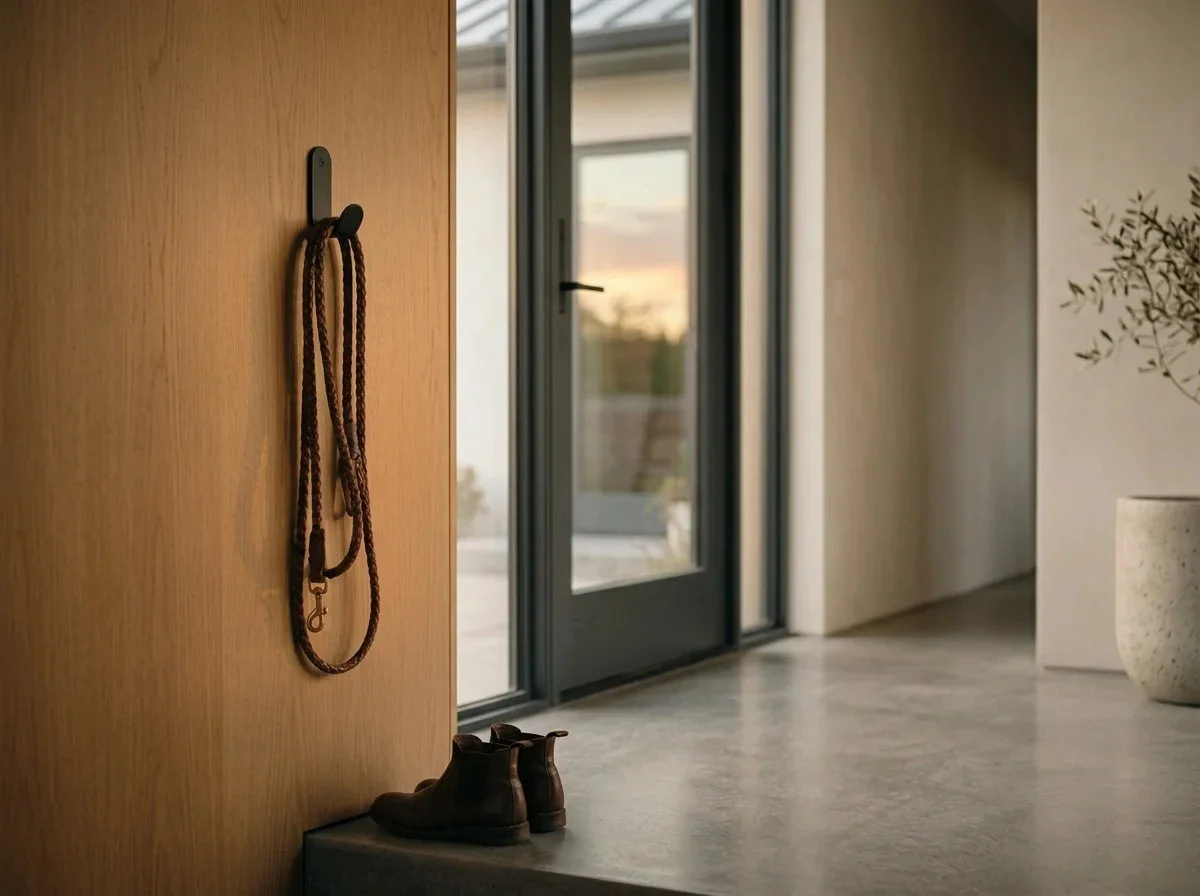
When the pet dies, every one of those routines ends on the same morning. Your body keeps performing the first half of each action, reaching, pausing, listening, and then has nowhere to put the second half. This may be why grief for a pet so often shows up as a physical stumble rather than a thought.
The loss of the caring role is its own grief, separate from missing the pet. If you managed a chronic illness, measured insulin, lifted an arthritic dog into the car or hand-fed a cat through their final months, a large part of your identity may have been organized around keeping them going. A 2022 qualitative systematic review by Michelle Cleary and colleagues4, drawing on 17 studies, found that the relationship itself and what the owner did within it were central to how people described their grief. People spoke not only about missing the pet but about no longer knowing what to do with themselves.
The pet’s needs also gave you a reason to get up on days when you had no other. When those scaffolds disappear, sleep, meals and exercise often collapse with them. Why your home feels empty after your pet dies goes further into this.
What research tells us about intense pet bereavement
Research into pet bereavement has developed over several decades. In January 2026, Philip Hyland of Maynooth University1 added important evidence to that work with a study published in PLOS ONE, titled “No pets allowed.” It surveyed 975 adults in the UK, quota-matched to the population on sex, age, nation and income. Participants listed their bereavements, including the death of a beloved pet, chose the most distressing, and completed a validated measure of prolonged grief disorder for that loss.
Among those who had lost both a pet and a person, 21 percent named the pet’s death as the most distressing loss of their life. Using symptom criteria rather than clinical diagnosis, the study classified 7.5 percent of pet-bereaved participants as having probable prolonged grief disorder, lower than after the death of a child (21.3 percent) but close to the rates after losing a sibling, another family member or a close friend. The study also found that the symptoms of prolonged grief were structured the same way after a pet’s death as after a person’s.
Hyland concluded that the diagnostic manuals, which recognize prolonged grief disorder only after the death of a person and so do not formally recognize pet death as a qualifying bereavement, are out of step with the evidence. He states the limits himself: the study is cross-sectional, so it shows association rather than cause; the panel was not a true random sample; and it did not record how the pet died. But the finding is consistent with earlier work. In 2020, Sherman Lee3 studied 395 adults whose functioning was impaired after a pet’s death and found their symptoms clustered in the pattern the DSM-5 describes for disordered grief.
Most people who lose a soul pet will not meet these criteria. But the intensity you are feeling has been measured, in sizeable samples, by people with no reason to flatter you, and in its structure it looks like grief after other significant deaths. If you have wondered whether it is normal to grieve this much over a pet, the research has stopped asking.
Why grief affects your body, your sleep and your concentration
Grief is physical: a tight chest, a stomach that refuses food, exhaustion that sleep does not fix, a mind that cannot hold a paragraph.
Most of what is known about this comes from research on human bereavement, and it should be read that way. A 2007 review in The Lancet by Margaret Stroebe, Henk Schut and Wolfgang Stroebe7 summarized decades of research showing that bereavement is associated with increased physical symptoms, higher use of medical services and, in the early weeks and months, a measurable rise in mortality risk. The authors were careful to say that grief is not an illness and most people adapt without professional help. But the body is clearly involved.
Sleep is one of the most common casualties. A 2020 systematic review by Marike Lancel, Margaret Stroebe and Maarten Eisma8, again of human bereavement, found a high prevalence of sleep disturbance after loss, a consistent association between grief intensity and poor sleep, and preliminary evidence that the relationship may run both ways. These are associations, not proof that one causes the other.
Concentration may suffer for a related reason. Mary-Frances O’Connor, a neuroscientist who studies grief at the University of Arizona, has proposed with Saren Seeley9 an explanatory framework in which grieving is understood as a form of learning. In this model, the brain builds a detailed expectation over thousands of repetitions of where an attachment figure is, what they need and when they will appear. That expectation does not update simply because the person has been told the facts; it updates slowly, through repeated encounters with the absence, and in the meantime keeps generating predictions that turn out wrong. The framework offers one plausible account of why the reaching happens, why you keep hearing the tags, and why you are so tired doing so little. It is a proposed explanation drawing on neuroscience, not a settled finding, and it was developed for human loss.
None of this research was conducted on pet loss. Whether it transfers fully is an open question. But the ideas it rests on, attachment, routine and the expectations built by a shared life, describe a soul pet relationship closely enough that many bereaved owners recognize themselves in it.
The fear that life will never feel meaningful again
Underneath the pain of the first weeks is often a quieter fear: that this is permanent. Not the crying, which you suspect will ease, but the flatness, the sense that what made ordinary days worth getting up for has been removed and nothing will replace it.
This fear deserves to be taken seriously rather than argued away. Losing the reason you went outside, spoke out loud at home and gave the evenings a shape is a loss of meaning, not only of company.
What the evidence suggests is more modest than a promise and more useful than one. Longitudinal studies of human bereavement generally find that most people gradually resume functioning and report meaningful experiences again, usually without the grief disappearing. Equivalent long-term studies of pet loss are scarce. What exists is qualitative: the Cleary review included a theme the authors called “their future,” in which people described, often with surprise, that life had slowly become livable, and that some had found things in the experience they valued. That is what some people report. It is not a guarantee of what you will find.
The flatness of early grief is often bound up with exhaustion and broken sleep, and for many people it eases as those ease. The deeper question of what will matter to you now is slower, and you do not have to answer it this month. When meaning does return, people often describe it arriving sideways, through a conversation, a task, an unexpected laugh, and noticing it only afterward.
Guilt, regret and the last decisions
Many people who lose a soul pet find themselves revisiting the final days, decisions or circumstances of the death. If you chose euthanasia, you revisit the timing. If you did not, you revisit the signs you think you missed. If the death was sudden, you revisit the morning, the door, the moment you were not looking.
In the Cleary review, guilt was one of five major themes across all 17 studies. A 2018 study in Bereavement Care by Cori Bussolari and colleagues10 analyzed the responses of 672 bereaved owners to a question about their decision to euthanize their pet.
The learning framework described earlier offers one way of understanding this. When the mind’s expectation of the world and the actual world no longer match, it produces counterfactuals: if only, what if, I should have. In that account, these are not evidence of wrongdoing. They are the sound of a mind searching for the rule that would have let it avoid the outcome, because a rule would make the world feel safe again.
Guilt can arise in very different circumstances. Some people worry that they acted too soon; others worry that they waited too long. These feelings deserve careful examination, but the intensity of guilt alone cannot establish whether a decision was right or wrong. One practical way to examine it is to write the accusation down in full, then write what you actually knew at the time, not what you learned afterward. The two accounts are often very different, and seeing them side by side is more useful than arguing with the feeling.
If the guilt loop is a daily visitor, why you feel so guilty after losing a pet goes further, and the free guide I Keep Thinking I Failed Them is written for exactly this. If timing is the specific wound, Did I put my dog down too soon? addresses it directly.
Why other people’s responses can make grief harder
You may already have heard the sentences. It was just a dog. You can always get another one.
The grief researcher Kenneth Doka17 gave this experience a name in 1989: disenfranchised grief, meaning grief that is not openly acknowledged, socially supported or publicly mourned. Pet loss is a textbook example. There is usually no funeral, no leave from work, no card from the office, no ritual that signals to the people around you that something serious has happened.
A 2019 study in Anthrozoös by Breeanna Spain, Lisel O’Dwyer and Stephen Moston12 surveyed 133 bereaved owners and found that when grief was severe, disenfranchisement was associated with less post-traumatic growth.
What can you do about other people? Less than you would like, more than nothing. Choose who you tell: one or two people who understood what the pet meant to you are worth more than a wide circle of polite sympathy. Say what you need rather than hoping it will be guessed: “I do not want advice, I want to talk about her for ten minutes.” And when someone says the wrong thing, which they will, most of them are not cruel. They have not had this loss, or they had it and were told to get over it, and they are passing on what they were given. When someone says it was just a pet looks at this more closely.
Does recovering mean letting go of them?
If the pain eases, does that mean the love is fading?
For much of the twentieth century, the dominant view was that the task of mourning was to detach from the one who died and reinvest elsewhere. Researchers have largely abandoned that view, for two reasons.
Grief, in this view, is not the process of ending a relationship. It is the process of changing one.
The first is the work on continuing bonds, introduced by Dennis Klass, Phyllis Silverman and Steven Nickman in 199616. Studying bereaved parents, widows and others, they found that most people did not detach at all. They kept an inner relationship with the person who died, talking to them, consulting them, carrying them into new situations, and this went with healthy adaptation, not failure. Grief, in this view, is not the process of ending a relationship. It is the process of changing one.
The second is the Dual Process Model, proposed by Margaret Stroebe and Henk Schut in 199915. People who adapt well do not stay in grief continuously. They oscillate. Some of the time they face the loss directly. Some of the time they turn toward the practical business of a changed life. Both are part of grieving. The turning away is not avoidance. It is rest, and it is how a person builds a life that can hold the loss.
Put the two together and an answer takes shape. Recovering from the loss of a soul pet, to the extent anyone recovers, does not mean the relationship ends. It means the relationship stops being lived out in the kitchen and the hallway and starts being carried in you. The pain becoming less constant is not love fading. It may be the slow work, described in the learning framework above, of coming to know where they are now: not in the house, and still yours.
Continuing bonds: remembering a soul pet without getting stuck
If continuing the relationship is healthy, what does it look like in practice, and is there a version that is not?
The most thorough answer comes from a systematic review by Ben Hughes and Beth Lewis Harkin2, published online in OMEGA in 2022, which synthesized 36 studies on continuing bonds after a pet’s death. Two different things emerge from it: evidence that such bonds are common, and more mixed evidence about their effects.
On the first, the forms were familiar: keeping belongings, creating memorials, talking to the pet, dreaming about them, telling their stories, including them in religious belief, and, for some, welcoming a new pet in a way that honored the old one.
On the second, the findings were mixed in an instructive way. In some studies, continuing bonds were associated with reduced loneliness and less intense grief, and owners who used the bond with self-compassion reported lower grief and better functioning. In others, continuing bonds were associated with more intense grief, particularly when built around something painful such as the circumstances of the death, and particularly when the owner’s grief was dismissed by others. Not all continuing bonds are beneficial, and the same bond can help one person and hurt another. Having the connection acknowledged by others appeared to matter.
A 2017 study by Janice Habarth and colleagues13, of more than 4,000 recently bereaved owners, added a detail many grieving people will recognize: the same act could be comforting and distressing at once. Looking at their photographs. Holding the collar. Walking the old route. They are often both, and the balance shifts.

There is no checklist for a healthy continuing bond, and no test that sorts good from bad. But one question that many people find useful to ask of a habit is this: does it let you remember them, or does it mostly return you to the moment of losing them? Memory tends to widen, bringing back the whole dog or cat across the whole life. Reliving tends to narrow, returning you to one room on one day. Both will happen, and neither is wrong. If reliving is the only form your remembering takes months on, that is worth mentioning to someone who can help.
In practice
Getting through the first difficult days
If your loss is recent, you do not need a theory of grief this week. You need to get to Friday. These are practical measures that bereaved owners commonly find useful. None is a treatment.
Cut the day down to what is necessary. Food, water, some sleep, any medication you take, and the few tasks that cannot wait. Everything else can be deferred for a few days, including replying to messages. If you can take a day or two off work, take them. If you cannot, tell one trusted colleague what has happened so you are not performing normality alone.
Ask one person for one specific thing. “Can you come and sit with me on Thursday evening” is easier to answer than “let me know if you need anything,” and more likely to happen. People want to help and do not know how. Give them the instruction.
Plan the empty times, not the empty spaces. The worst moments land at the hours that belonged to the pet: the walk, the evening feed, the last trip outside. Put something in those slots for the first week, even if it is only a phone call. The spaces in the house can wait until you are ready, and no one but you gets a vote on when that is.
Write things down. Not a journal, unless you want one. Just the details you are afraid of losing: the way they slept, the sounds they made, what they did when you came home. These fade fastest and are the ones people most regret not recording.
The Studio has a longer article on this period, what to do in the first days after your pet dies, and a free emailed guide, The First 72 Hours, for the first hours and nights.
In practice
Mornings, evenings and the dates that hurt
Some moments are reliably harder than others, and knowing which lets you prepare rather than be ambushed.
Mornings are often worst because waking is a daily re-learning. For a second or two the day begins as it always did, and then the fact arrives again. A fixed sequence of small actions in the first ten minutes, before thinking starts, helps many people: feet on the floor, curtains, kettle, out of the bedroom.
Evenings are hard for a different reason. Daytime has distractions. Evenings were when the pet was most present: on the sofa, at your feet, asking for the last walk. Decide the night before what the evening will contain: a phone call at eight, a walk at the old time, a film already chosen. Unstructured time in an empty living room is where grief does its worst work.
Significant dates arrive on a calendar that does not care how you are doing: the anniversary, their birthday, the first holiday, the vet reminder that still comes by text. Decide in advance how you will mark the day, and tell someone it is coming. It need not be elaborate: their favorite walk, a donation, a letter you never send. The Studio has a private, free pet memorial space if writing to them helps. What hurts most is usually not the date but the sense that it passed and no one knew.
When grief stays overwhelming
Most grief, including severe grief, becomes more manageable over months without professional treatment. For a minority it does not, and it is worth knowing what that looks like.
The formal criteria for prolonged grief disorder in DSM-5-TR require that at least twelve months have passed since the death of a person who was close to the bereaved, and that intense longing or preoccupation, with other symptoms, is still present nearly every day and causing significant impairment. ICD-11 uses a six-month threshold. Both manuals define the loss as the death of a person, so a pet owner cannot currently receive this diagnosis, however severe their grief. The 2026 and 2020 studies found that the same symptom pattern occurs after pet loss, which is why the criteria are still a useful description of what persistent, impairing grief looks like, even where the diagnosis itself is unavailable.
Signs that more support may be appropriate include:
- Being unable to carry out basic work, care or household responsibilities many months after the loss.
- Persistent avoidance of anything connected with the pet, or an inability to think about anything else.
- Continued severe sleep disruption, significant weight change, or new reliance on alcohol or other substances.
- Guilt that has hardened into a settled belief that you are a bad person, rather than a painful question you keep asking.
- Feeling that life is not worth continuing. If this is present, please contact a crisis line or emergency services today. In the United States, you can call or text 988; elsewhere, findahelpline.com lists local services.
Help exists and much of it is free. Several US veterinary colleges run pet loss support lines staffed by trained volunteers; Cornell University College of Veterinary Medicine maintains one and lists others on its pet loss resources page. Outside the United States, findahelpline.com lists free, confidential support lines by country. A counselor or therapist who is experienced with grief and takes pet loss seriously can help; the treatments for prolonged grief were developed and tested for human bereavement, and whether they work as well for pet loss has not been formally studied, but a grief-informed professional can adapt what is known. Asking for this is not an admission that your grief is abnormal. It is a recognition that it is heavy.
Happiness, absence and living with both
At some point you will laugh at something, or spend an afternoon without thinking of them and notice it afterward. And then a second feeling may arrive: guilt, or something like disloyalty.
The bond is what you are still carrying when the pain is quiet.
The Dual Process Model offers a way to understand this: in that model, oscillating between grief and ordinary life is part of how people adapt, and the ordinary-life phases are expected to contain pleasure. The feeling of betrayal comes from a belief that your pain is the last thing connecting you to them, so that letting the pain ease means letting them go.
That belief does not survive examination. Your connection to a soul pet was never made of pain. It was made of thousands of ordinary mornings, of being known, of a routine two creatures kept together for years. The pain is what its absence feels like. It is real and it will keep returning, but it is not the bond. The bond is what you are still carrying when the pain is quiet.
Many people find that happiness and grief stop being alternatives and start happening at the same time. A good day with a hollow in it. A new dog or cat, if one eventually comes, loved fully and differently, with the first one’s name still in the house. Why smiling again after pet loss feels so wrong is written for the first time this happens.
Living with love, absence and uncertainty is what every long love eventually asks of the one who is left. You are being asked it by a dog or a cat, and that does not make the asking smaller.
Frequently asked questions
How long does grief for a soul pet last?
There is no reliable average, and no pet-specific research that follows people long enough to give one. Many people report that the most disabling period eases within months while missing the pet persists for years or indefinitely, but experiences vary widely. In the 2026 Hyland study, 7.5 percent of pet-bereaved participants met symptom criteria for probable prolonged grief disorder, meaning intense symptoms persisting well beyond the first year. There is no “should.”
Is it normal to grieve a pet more than a person I have lost?
It is common enough to be measured. In the Hyland study, 21 percent of people who had lost both a pet and a person named the pet’s death as their most distressing bereavement, and in the Eckerd study closeness to the one who died was the strongest predictor of grief severity in both pet and human loss.
I still talk to them. Is that a problem?
Talking to a pet who has died is one of the most frequently reported continuing bonds in the research, and most people who do it describe it as comforting. It is worth discussing with someone if it becomes distressing rather than soothing, or if it feels like the only way you can bear the day.
Should I keep their things or put them away?
Whichever you can bear, at whatever pace. Research on continuing bonds finds that holding onto belongings is common and is experienced as both comforting and painful, often at once. The research does not show that keeping things delays grief or that removing them speeds it, so the decision can be made on what helps you. The bowl you cannot put away is written for this decision.
Does getting another pet help?
For some people it does; the research records owners who experienced a new pet as a way of honoring the old one. For others it feels like a replacement and deepens the guilt. There is no correct interval and no rule. Some people find it useful to ask whether they want a pet or want their pet back, but wanting your pet back does not by itself mean a new one would be a mistake. It is an individual decision, and it is yours.
Can a therapist help with pet loss if they do not specialize in it?
Often yes, provided they take the loss seriously. Treatments for prolonged grief were developed and tested for human bereavement, and their effectiveness for pet loss has not been formally studied. But the 2020 and 2026 studies found that grief after pet loss follows the same symptom structure, and a grief-experienced professional can adapt what is known. If a therapist minimizes the loss in the first session, you are entitled to find another one.
Living with the question
Can you learn to live with the loss of your soul pet without feeling that you are leaving them behind?
The research, and the experience of many people who have lived it, suggests that you can, with two qualifications. You cannot choose the speed, and nothing suggests you will arrive at a place where they no longer matter. What many people describe instead is a life in which the bowl has gone from the floor and the leash from the door, and in which they still know, with complete precision, the weight of a head on their foot. The absence is still there, quieter, and sometimes not quiet at all.
That is not leaving them behind. Leaving them behind would be forgetting the weight of their head, and that is not what people describe. What changes, for those who find their way to it, is not whether they carry the pet but how. For a while you carry them as pain, because pain is what a missing attachment feels like to a body that is still looking. Later, if it comes, you may carry them as something closer to what they were while they were alive: company. Not the kind that meets you at the door, but the kind that is simply part of who you are.
You walked past the bowl again and again today. There may come a day when you walk past the place where it used to be, and think of them, and keep walking, and find that the thought is warm. It is slower than anyone wants, and it does not arrive on order. But it happens, and when it does, it is real.
Resources from The Pet Loss Studio
- PaidThe First Days Support Pack
Eight PDFs, around 160 pages, plus access to the A Gentler Thought online tool, for the first days and weeks after losing a pet. - FreeThe Healing Letter
A welcome email, then one letter a week for thirteen weeks. - FreeThe First 72 Hours After Pet Loss
A short guide to the first hours and days, sent by email.
Sources and further reading
- Hyland, P. (2026). No pets allowed: Evidence that prolonged grief disorder can occur following the death of a pet. PLOS ONE, 21(1), e0339213. Read studyBack to text
- Hughes, B., & Lewis Harkin, B. (2022; print 2025). The impact of continuing bonds between pet owners and their pets following the death of their pet: A systematic narrative synthesis. OMEGA: Journal of Death and Dying, 90(4), 1666 to 1684. Read studyBack to text
- Lee, S. A. (2020). Does the DSM-5 grief disorder apply to owners of deceased pets? A psychometric study of impairment during pet loss. Psychiatry Research, 285, 112800. Read studyBack to text
- Cleary, M., West, S., Thapa, D. K., Westman, M., Vesk, K., & Kornhaber, R. (2022). Grieving the loss of a pet: A qualitative systematic review. Death Studies, 46(9), 2167 to 2178. Read studyBack to text
- Kurdek, L. A. (2009). Pet dogs as attachment figures for adult owners. Journal of Family Psychology, 23(4), 439 to 446. Read studyBack to text
- Eckerd, L. M., Barnett, J. E., & Jett-Dias, L. (2016). Grief following pet and human loss: Closeness is key. Death Studies, 40(5), 275 to 282. Read studyBack to text
- Stroebe, M., Schut, H., & Stroebe, W. (2007). Health outcomes of bereavement. The Lancet, 370(9603), 1960 to 1973. Read studyBack to text
- Lancel, M., Stroebe, M., & Eisma, M. C. (2020). Sleep disturbances in bereavement: A systematic review. Sleep Medicine Reviews, 53, 101331. Read studyBack to text
- O’Connor, M.-F., & Seeley, S. H. (2022). Grieving as a form of learning: Insights from neuroscience applied to grief and loss. Current Opinion in Psychology, 43, 317 to 322. Read studyBack to text
- Bussolari, C. J., Habarth, J., Katz, R., Phillips, S., Carmack, B., & Packman, W. (2018). The euthanasia decision-making process: A qualitative exploration of bereaved companion animal owners. Bereavement Care, 37(3), 101 to 108. Read studyBack to text
- Adams, C. L., Bonnett, B. N., & Meek, A. H. (2000). Predictors of owner response to companion animal death in 177 clients from 14 practices in Ontario. Journal of the American Veterinary Medical Association, 217(9), 1303 to 1309. Read study
- Spain, B., O’Dwyer, L., & Moston, S. (2019). Pet loss: Understanding disenfranchised grief, memorial use, and posttraumatic growth. Anthrozoös, 32(4), 555 to 568. Read studyBack to text
- Habarth, J., Bussolari, C., Gomez, R., Carmack, B. J., Ronen, R., Field, N. P., & Packman, W. (2017). Continuing bonds and psychosocial functioning in a recently bereaved pet loss sample. Anthrozoös, 30(4), 651 to 670. Read studyBack to text
- Packman, W., Bussolari, C., Katz, R., Carmack, B. J., & Field, N. P. (2017). Posttraumatic growth following the loss of a pet. OMEGA: Journal of Death and Dying, 75(4), 337 to 359. Read study
- Stroebe, M., & Schut, H. (1999). The dual process model of coping with bereavement: Rationale and description. Death Studies, 23(3), 197 to 224. Read studyBack to text
- Klass, D., Silverman, P. R., & Nickman, S. L. (Eds.). (1996). Continuing bonds: New understandings of grief. Taylor & Francis. Back to text
- Doka, K. J. (1989). Disenfranchised grief: Recognizing hidden sorrow. Lexington Books. Back to text
- Cornell University College of Veterinary Medicine. Pet Loss Resources and Support. Visit resource